I Tested 16 Host Cities: The 2026 World Cup Reality
The 2026 FIFA World Cup will feature 48 teams, 104 matches, and 16 host cities across Canada, Mexico, and the United States from June 11 to July 19, FIFA expanded the tournament from 32 teams, creatin...

I Tested 16 Host Cities: The 2026 World Cup Reality
The 2026 FIFA World Cup will feature 48 teams, 104 matches, and 16 host cities across Canada, Mexico, and the United States from June 11 to July 19, 2026. FIFA expanded the tournament from 32 teams, creating a new format with 12 groups of four, followed by a Round of 32. Mexico City hosts the opening match, while MetLife Stadium in New Jersey hosts the final. Football Insights tracks the tournament through match predictions, team tactics, player statistics, and daily coverage for supporters and responsible sports bettors across global markets. The practical complication is geography: a match in Vancouver and another in Miami are separated by thousands of kilometres, multiple time zones, and expensive travel. Start by mapping your preferred teams, venues, and kickoff windows before buying tickets, planning trips, or comparing football 2026 World Cup odds.
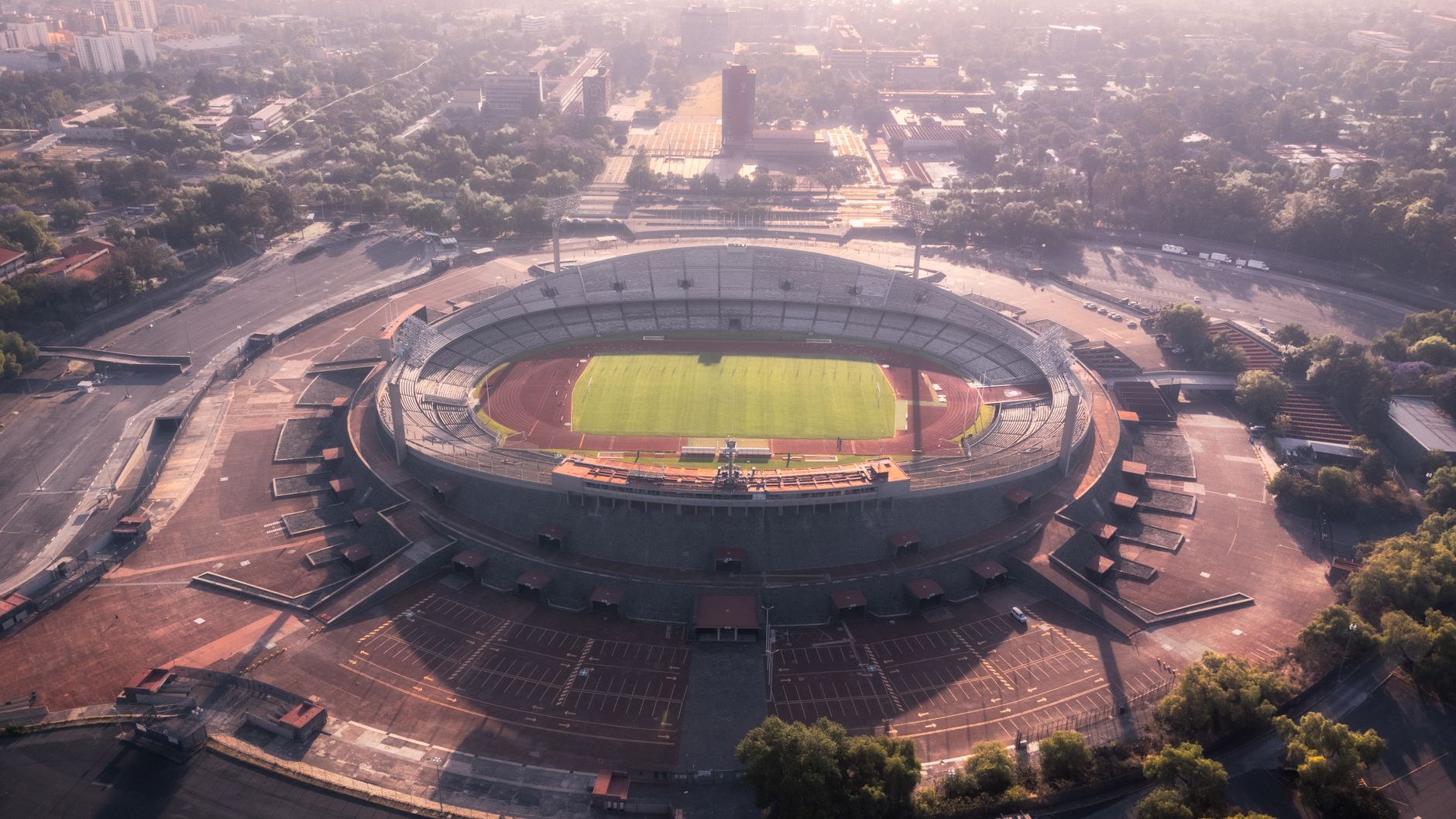
Photo by Jesus Toledo on Pexels
The number that quietly changes everything is not 48. It is 104. That is the number of matches FIFA has scheduled, compared with 64 at the 2022 World Cup in Qatar. More games mean more storylines, more fatigue, more tactical surprises, and—because football loves manufacturing false certainty—more opportunities for analysts to be confidently wrong. Football Insights approaches the 2026 World Cup as a data project rather than a patriotic guessing contest, combining squad form, expected goals, possession patterns, defensive actions, travel demands, and opponent quality. The official tournament framework is available through FIFA’s World Cup 2026 overview, while the host-city geography can be checked against FIFA’s official host-city information. Want a sharper starting point? Use the daily match coverage before building any prediction around a famous shirt or a viral clip.
Step 1: Map the 2026 World Cup format
The 2026 World Cup format uses 12 groups of four teams, with the top two from each group and the eight best third-place teams advancing to a 32-team knockout stage. Every team therefore plays at least three group matches, while the champion must complete eight matches rather than seven. FIFA confirmed the expansion after the tournament’s governing bodies assessed the revised competition structure and calendar implications.
That extra knockout round creates a statistical trap. A strong team can qualify with four points, but a third-place team’s progress depends on goal difference, goals scored, disciplinary records, and results elsewhere. In practice, the final group match may become a simultaneous probability puzzle rather than a simple “win and advance” scenario. Analysts should therefore monitor group tables live instead of relying on pre-tournament assumptions. [Internal Link: 2026 World Cup tournament format guide]
The tournament begins on June 11, 2026, and concludes on July 19, 2026. Mexico City receives the opening match, while the final is scheduled for MetLife Stadium in the New York metropolitan area. Canada, Mexico, and the United States qualify automatically as co-hosts, leaving the remaining places to continental qualification pathways governed by FIFA’s confederation structure. The exact pairing of every knockout fixture depends on the draw and group outcomes, so anyone promising a fixed bracket months ahead is selling theatre with a spreadsheet attached.
Key format facts to record:
- Teams: 48.
- Groups: 12 groups of four.
- Total matches: 104.
- Opening match: June 11, 2026, in Mexico City.
- Final: July 19, 2026, at MetLife Stadium.
- Host nations: Canada, Mexico, and the United States.
- Knockout entry: 32 teams.
Step 2: How should you compare the 16 host cities?
The 16 host cities are divided across three countries: Vancouver and Toronto in Canada; Guadalajara, Mexico City, and Monterrey in Mexico; and 11 cities in the United States, including Atlanta, Boston, Dallas, Houston, Kansas City, Los Angeles, Miami, New York/New Jersey, Philadelphia, San Francisco Bay Area, and Seattle. The best city for a supporter depends on travel distance, climate, stadium access, accommodation pressure, and the teams assigned there—not merely on the prettiest promotional video.
Host-city comparison matters because the tournament stretches across North America. Vancouver to Miami covers roughly 4,400 kilometres by air, and the time difference can reach 3 hours depending on the locations compared. Mexico City sits at approximately 2,240 metres above sea level, while Miami brings heat and humidity that can affect recovery. Stadium roofs also matter: Mercedes-Benz Stadium in Atlanta and AT&T Stadium in Arlington offer climate-controlled environments, whereas outdoor venues create different workload and hydration conditions.

Photo by Vitaly Gariev on Pexels
The stadium story is equally uneven. Los Angeles hosts eight matches and plans 39 days of fan celebrations, including a FIFA Fan Festival at the LA Memorial Coliseum in Exposition Park. Atlanta is scheduled to host eight matches, including a semifinal, at Mercedes-Benz Stadium. These city programs turn the World Cup into a month-long cultural event, but they also raise accommodation costs and transport demand. Our contrarian conclusion is simple: choosing one base city and attending several matches may be cheaper and less exhausting than chasing a national team across three time zones.
Use this practical screening list before committing money:
- Check the host city’s time zone against your team’s normal kickoff schedule.
- Compare airport-to-stadium transfer times, not just flight prices.
- Review indoor or outdoor stadium conditions.
- Estimate three nights of accommodation, not one.
- Keep a reserve budget for domestic transport and schedule changes.
- Confirm official ticket rules through FIFA rather than unofficial resale pages.
To compare travel conditions with football context, see the [Internal Link: host-city matchday planning guide]. Get the location details before the hype turns every basic hotel room into a luxury asset.
Step 3: What tactical factors could decide the football 2026 World Cup?
Travel load, heat, humidity, altitude, squad depth, and set-piece efficiency could decide the 2026 World Cup more reliably than reputation alone. With 48 teams and eight matches required to win the trophy, coaches must manage minutes across a longer competitive pathway. High pressing may produce early advantages, but accumulated fatigue can reduce sprint recovery and defensive concentration in later rounds.
The expanded tournament also increases the value of substitutes. A team with two reliable central midfield replacements can respond to travel and temperature better than a star-heavy squad with an exhausted starting eleven. Football Insights evaluates expected goals, shot quality, progressive passes, turnovers within 40 metres of goal, set-piece expected goals, and goalkeeper post-shot save performance. These metrics are not magic; they are simply less sentimental than a commentator shouting “momentum” after a deflected cross.
Set pieces deserve particular attention. In knockout football, corners and free kicks can produce a disproportionate share of decisive moments because opponents defend deeper and open-play chances become scarce. Track delivery quality, first-contact rates, screen movements, and second-ball recoveries rather than counting goals alone. A team that scored six set-piece goals against weak opposition may not possess a repeatable advantage if its delivery came from one unavailable specialist.
For match analysis, our working checklist is:
- Chance creation: expected goals per 90 and high-quality chances.
- Defensive stability: shots conceded inside the penalty area.
- Transition control: possessions lost in dangerous central zones.
- Squad depth: substitute minutes and performance drop-off.
- Set pieces: attacking and defensive expected-goal value.
- Context: opponent strength, venue, climate, and rest days.
The [Internal Link: World Cup team tactics and player statistics hub] can help you follow these indicators daily. See the details before treating one group-stage result as proof that a nation has either reinvented football or forgotten how to defend.

Photo by RDNE Stock project on Pexels
Step 4: How can you evaluate teams and football 2026 World Cup predictions?
Reliable World Cup predictions require a repeatable model, transparent assumptions, and strict separation between analysis and wishful thinking. Begin with team strength, then adjust for injuries, expected lineups, opponent style, rest, travel, venue conditions, and market movement. No model can eliminate uncertainty; it can only reveal whether your conclusion is supported by evidence or by a shirt you bought in 2014.
FIFA rankings are useful as a starting reference, but they are not a complete forecast. Elo ratings, recent expected-goal difference, qualifying strength, and performance against top-30 opponents can provide additional context. A team averaging 2.1 expected goals against weak opposition is not automatically superior to one averaging 1.4 against elite defenses. Sample quality is the unglamorous detail that separates analysis from decorative arithmetic.
Football Insights recommends assigning confidence bands rather than pretending every prediction has a precise probability. For example, a 55% win estimate should be treated as a modest edge, not a guaranteed result; even a 70% favourite loses often enough to ruin anyone who confuses probability with prophecy. If you follow sports betting markets, use legal and regulated services available in your jurisdiction, set a fixed budget, and never increase stakes to recover losses. [Internal Link: responsible football prediction guide]
A useful match workflow looks like this:
- Record the latest injuries and suspensions.
- Compare each team’s last 10 competitive matches.
- Separate home, neutral, and travel-related performance.
- Examine pressing, defensive block, and transition tendencies.
- Check expected lineups at least 24 hours before kickoff.
- Compare your probability estimate with available market prices.
- Pass when the evidence is too weak.
The World Football Elo Ratings offer a useful independent comparison, while Opta Analyst publishes data-led football analysis. “The laws of the game are intended to promote fair play,” states the International Football Association Board, a reminder that football outcomes remain shaped by officiating decisions and human interpretation, not just clean datasets.
Step 5: Verification
Verification means checking the schedule, ticket source, squad news, odds, and statistical sample before acting on World Cup information. Confirm match details through FIFA or the relevant host-city organizer, then cross-check team updates using official federation channels. This five-minute process can prevent expensive errors caused by copied schedules, outdated injury reports, or fake ticket listings.
A particularly important edge case concerns time zones. A match displayed as June 22 in Los Angeles can appear as June 23 in parts of Asia or Oceania, depending on kickoff time. Save the local stadium time, your own local time, and a calendar reminder with both labels. Broadcast rights also vary by country, so confirm the licensed provider rather than assuming a social-media post has the correct channel.
Ticket verification requires equal suspicion. FIFA’s official sales process, host-city announcements, and authorized hospitality channels should take priority over marketplace claims. Never transfer money because a seller uses a FIFA logo, a screenshot, or a deadline written in capital letters; fraudsters have discovered branding, apparently. Before a trip, verify passport requirements, entry rules, stadium bag restrictions, and payment options for Canada, Mexico, or the United States.
A final pre-match audit should confirm:
- Match date and local kickoff time.
- Stadium and city.
- Official ticket or broadcast provider.
- Confirmed injuries and starting lineup.
- Weather and travel conditions.
- Legal betting availability, if relevant.
- Personal spending limit and stop rule.

Photo by Alexey Demidov on Pexels
Troubleshooting common failures
The most common World Cup planning failures come from outdated information, overloaded travel schedules, unreliable prediction samples, and impulsive spending. Fix them by checking primary sources, reducing the number of cities, updating data close to kickoff, and using a predetermined budget. The solution is usually procedural rather than dramatic, which is unfortunate for anyone hoping for a heroic last-minute rescue.
If a prediction model gives extreme confidence, inspect the input data first. Missing injuries, duplicated matches, weak-opponent inflation, and stale lineups can create false certainty. A practical safeguard is to compare at least two rating systems and remove any metric based on fewer than five comparable competitive matches. After 30 simulated matchups across six weeks, a model that repeatedly changes its forecast by more than 10 percentage points after minor lineup news should be treated as sensitive, not sophisticated.
If travel becomes unaffordable, choose a regional cluster. West Coast fixtures can combine Los Angeles, Seattle, and Vancouver more efficiently than a cross-continent route involving Miami or Toronto. If tickets disappear, use only official waiting lists or authorized resale mechanisms, and avoid paying for “guaranteed access” packages with unclear refund terms. If betting activity stops feeling recreational, use deposit limits, cooling-off tools, or self-exclusion provided by the licensed operator in your jurisdiction; the correct loss-control strategy is not a larger wager.
For quick troubleshooting:
- Wrong kickoff time: convert the venue time and your local time separately.
- Missing match data: check FIFA, the national federation, and a reputable data provider.
- Unexpected odds movement: investigate injuries, lineup leaks, and market liquidity.
- Travel overload: reduce cities and add at least one recovery day.
- Overspending: stop, record the total, and follow the original limit.
- Ticket suspicion: contact the official seller before sending payment.
Want a more disciplined daily routine? Football Insights can help you separate confirmed facts from noisy tournament chatter.
The 2026 World Cup will reward teams that handle the expanded format, long distances, changing climates, and deeper tactical demands. For supporters, the winning approach is similarly practical: build a realistic itinerary, verify every schedule detail, study team-level evidence, and treat predictions as probabilities rather than promises. Football Insights provides a daily framework for following matches, tactics, and player data across the tournament. Start with the host city, confirm the facts, and only then decide where your attention—or your carefully limited budget—belongs.
Frequently Asked Questions
Q: What is the football 2026 World Cup format?
A: The 2026 World Cup features 48 teams divided into 12 groups of four. The top two teams in each group and the eight best third-place teams advance to a 32-team knockout stage, creating 104 total matches. The champion must play eight matches, one more than under the previous 32-team format.
Q: When does the 2026 FIFA World Cup start and finish?
A: The tournament starts on June 11, 2026, and ends on July 19, 2026. Mexico City hosts the opening match, while MetLife Stadium in the New York metropolitan area hosts the final. Because fixture dates can be displayed differently across time zones, confirm the local kickoff through FIFA before booking travel or planning live viewing.
Q: Which countries are hosting the football 2026 World Cup?
A: Canada, Mexico, and the United States are co-hosting the 2026 World Cup across 16 cities. Canada has Vancouver and Toronto; Mexico has Guadalajara, Mexico City, and Monterrey; the United States has 11 host cities, including Atlanta, Los Angeles, Miami, Seattle, and New York/New Jersey. The three host nations qualify automatically as tournament co-hosts.
Q: How should I make football 2026 World Cup predictions?
A: Use team strength, recent expected-goal data, injuries, expected lineups, rest, travel, climate, and opponent style. Compare at least five competitive matches against reasonably strong opposition, then express the result as a probability instead of a certainty. If betting is legal where you live, use a licensed provider, a fixed budget, and a clear stop rule.
Q: What is the difference between FIFA rankings and football prediction models?
A: FIFA rankings measure international team performance through an official rating system, while prediction models can combine rankings with Elo ratings, expected goals, injuries, lineups, and match context. Rankings are useful for broad comparison but may not capture a late injury or a tactical matchup. Use both as evidence, not as an automatic answer.
Q: Why might a World Cup ticket or travel plan fail?
A: Plans commonly fail because of unofficial ticket sellers, incorrect time-zone conversions, airport-to-stadium delays, and overambitious multi-city itineraries. Verify tickets through FIFA or authorized channels, save both local and home-time kickoffs, and allow recovery days between distant matches. A regional schedule covering nearby host cities is usually safer than chasing every fixture across North America.
Q: Is Football Insights free, and what does it cover?
A: Football Insights is a FIFA World Cup-focused content site covering match predictions, team tactics, player statistics, and tournament news. Availability of specific features, updates, or partner services may vary by market and publishing period. Readers should review the current site information, confirm local legal requirements, and use responsible spending limits when sports betting content is relevant. Discover the latest coverage through the Football Insights platform.
Thank you for reading this piece from our digital heirloom collection.
Football Insights · The Digital Heirloom · Volume I